
May 11, 2011


May 09, 2011
Checkerboard of days
Rain and sunshine, and rain again—
Calendar page of checkerboard days…
This timeless pattern have had inspired many creative minds. I'm one of the them and this time I'm using it to re-design an old pair of jean pants that are neither full length nor capri any longer for my daughter.
As my previous clothing re-desing post, this technique does not require a sewing machine. Tools you will need are scissors and needle. And measuring tape, of course.
1. Cut the bell bottoms off


3. Cut half way up—1˝—every 3/4˝

4. Unfold the edges.

5. Cut the bottoms into strips measuring 3/4˝ in width

6. String the strips through in a checkerboard pattern

7. Stitch every other 'checker' to secure the stripes in place. I did it by hand using back stitch

8. Wear as capris

…or shorts

May 04, 2011


May 03, 2011
Earl Pearl Grey
Last Tuesday Jamie Oliver's Food Revolution team hosted a twitter contest for a best smoothie. The timeline was filled with unique healthy and delicious ideas for this frothy concoction each creatively named. I decided to participate and first mix I had in mind was ingredients of my all time favorite drink—Earl Grey tea with pear and bergamot. I called it Pearl Grey Smoothie.


Although I don't have any idea where to find this exotic pear shaped citrus, I still wanted to combine the flavors of this tea, so I combined pear with cardamom, that reminds me of the bergamot some how plus it is used in drinks such as coffee and tea.
Now that I write this I realized, I could have added lime in lieu of bergamot… I'll do it next time!
Anyway, the smoothie came out great! Refreshing and rich as it is mildly sweet from the bosc pear. You know, it would be a perfect morning drink to kill the bad breath. Yogurt have active cultures that kill bad breath bacteria plus cardamom is known to be tough on them as well.
◊◊◊
Pearl Grey Smoothie
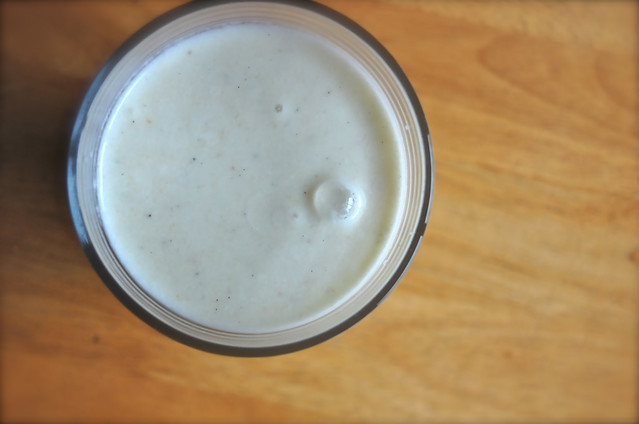
Makes 1 16 oz glass
1 cup organic whole yogurt
1 organic bosc pear, peeled, cored and cubed
4-5 cardamom pods, seeds removed and ground

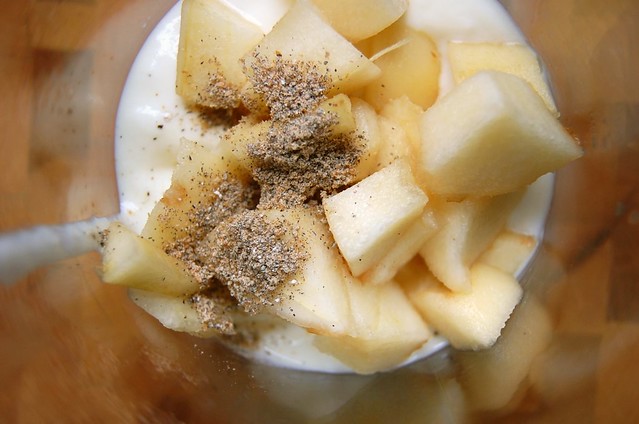
Combine all the ingredients and blend until smooth, enjoy!
So wake up and smell the cardamom!
May 02, 2011
HERBivores unite!
It is May! And may I say it is the best time to plant a garden outside. If you have limited time and do not wish to fuss with vegetables, plant herbs.
With each bite you will appreciate every little leaf or sprig of fresh herb for they take your cooking to a next level. They are not only an olfactory fantasy but a treat for your taste buds. Easy to grow, most of them are perennials, but when not, you can harvest the seeds for the next gardening year, or to use as spices.
You can use herbs in jillion of recipes, savory and sweet alike. Needless to say that eating fresh herbs will benefit you in many ways: boost your immune system, can cure ailments and conditions, and simply enrich your overall health.
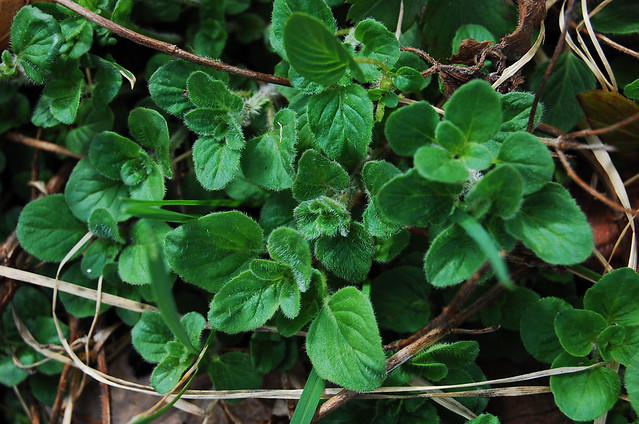
Today in my garden and on my plate is oregano—the bright star of Mediterranean and Spanish cuisines. We are quite familiar with a pungent woody taste of its dried version in pizza and spaghetti sauces. But while using dry oregano during winter I surely enjoy it fresh from the garden all spring and summer long.
Growing wild in the mountains of Greece, oregano can root deeply almost anywhere as long as its leaves get plenty of sunshine. Dormant during the cold season, it is the first one to wake up in my garden. It is filled with goodness (from the web): {the leaves and flowering stems are strongly antiseptic, antispasmodic, diaphoretic, expectorant—I make tea by steeping 1 T spoon of dry oregano in 8 oz of boiling water for 3 minutes to soothe coughs—stimulant and mildly tonic}
I stumbled upon this lovely legend about oregano and I'd like to share it:
{A young servant to Cinyras, the king of Cyprus, was carrying a large vessel full of valuable perfume oils which the king was very fond of. He dropped the container by accident, spilling its content. The servant boy was so afraid of what his punishment would be that he fainted, and while lying unconscious on the ground where the oil had spilled, he turned into the oregano plant.}
I grow two kinds of oregano: Greek, with hairy, thicker leaves and Spanish, with smoother, thinner leaves. However, over the years of growing side by side the two mixed up and now it's hard to tell which is which. So I use them both together.
When using oregano, strip the leaves to chop and add to your savory dish. You can compost the stems, or use them to cook pasta and rice—just add the stems to water where you cook your favorite carbs, or use them when making a soup stock.
Oregano is at home with vegetable dishes as well as meat, poultry and fish, and dairy! Just don't overdo—then it turns bitter.
I'm sharing a simple marinade made with fresh oregano and complimenting it garlic. Use this marinade for grilled chicken, shrimp or even as salad dressing. You would need mortar and pestle to crush the fresh ingredients to release their essential oils. I love using this gadget, it feels so primal!
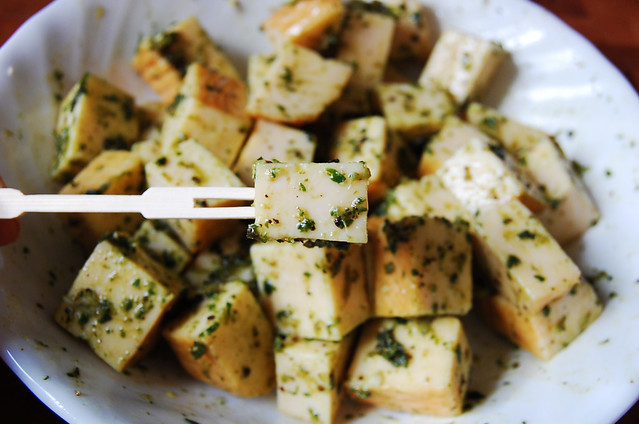
My brother came from Russia and brought a special treat from our region—smoked mata kway (milk cheese). So I used my oregano marinade to make this cheese snack. You can use any smoked soft cheese, such as smoked gouda.

The smoky flavor of cheese, the deep fresh flavor of oregano and the piquant kick of garlic flavor really sing in unison for this simple dish.
◊◊◊
Oregano Marinated Smoked Cheese
1 glove of garlic, peeled
1 t spoon coarse sea salt
1 t spoon black peppercorns
1 small dried chili
1/4 cup extra virgin olive oil
16 oz smoked soft cheese
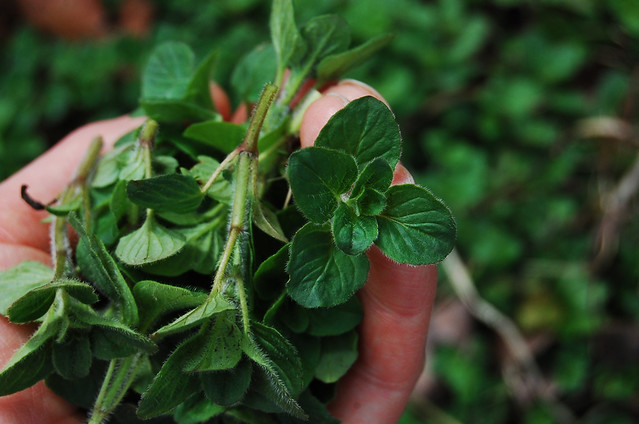
- Combine oregano, garlic, salt, peppercorns and chili in a mortar and press with pestle until all the oils are released and it is all well mushed.
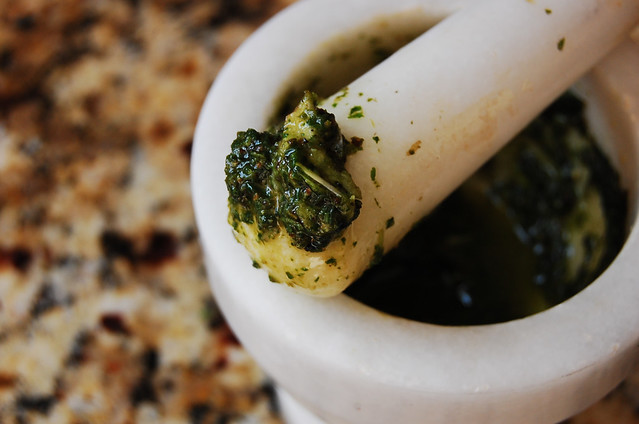
- Transfer to a small mixing bowl and all the oil, whisk it together to combine.
- Cut cheese into 1˝ cubes, pour marinade over and toss to cover completely.
- Serve as a snack or a side dish.

Grow your herbs, eat your herbs, be a HERBivore! (stay tuned for more herbilicilous ideas)
April 30, 2011
Black and White
I often hear that life is a black and white pattern. One black stripe is followed by a white one. Lately, I have been fallen into this pattern and could only perceive the world around me as an old noir broken down into black and white lines.
But have you ever noticed how striped patterns tend to opalesce with opulence of colors through camera lens or TV screen? I think sometimes to see the colors in life and break monochromatic rhythm of black and white all we need to do is to zoom out, look at it from afar. And let the black and white stripes shine with interference of new colorful patterns.
Often we inclined to think that if it's not black than it's white. For example, if we don't know how to do something, we rather disregard it as something difficult without even making a single attempt. But most of the times all it takes is to step out of this Black&White pattern, zoom out to see if there's any grey, and later colorful area.
My intend here in not to teach of preach, but to give creativity a chance. Even if it comes to such simple and everyday task, such as cooking a meal or a favorite treat. Just look around: almost on every package there are myriads of interesting and inspiring ideas longing to be embodied. Once you unleash your creativity it will bloom and bring the sweetest fruits that will fully satisfy the hart and the soul.
My husband learned baking cookies by reading the recipe on the back of the chocolate chips package. After a while he let himself be more creative and added second kind of chocolate chips—white chocolate. That was a huge success with kids. Thus the Black&White Chocolate Chip Cookie was born…
I took the idea of Black&White further a bit and mixed up two kinds of flour: 'black' whole wheat and 'white'—all purpose. Just for the fun of it!
◊◊◊
Black and White Chocolate Chip Cookies

Makes 1 1/2 dozen large cookies
WET
1 cup butter (2 sticks) softened
2/3 cup white sugar
2/3 cup brown sugar
2 large eggs
1 t spoon vanilla extract
DRY
1 1/4 cup white all purpose flour
1 1/4 cup whole wheat flour
1 t spoon baking soda
1 t spoon salt
6 oz semisweet chocolate chips
6 oz white chocolate chips
- In a bowl, beat butter with sugar until creamy, for about 2 minutes on high speed.
- Add eggs, one at a time, then add vanilla extract continuing beating to combine.
- Slowly add both flours, soda and salt, mix until all combined.
- Finally, fold in chocolate chips. Cover the batter and refrigerate for at least 2 hours.
- Preheat oven to 350°F, spoon about 1/4 cup (big cookie scooper) of batter onto an ungreased cookie sheet, 2 inches apart.

- Bake for 12 minutes, cool on a cookie sheet for 5 minutes then transfer to cooling rack to cool completely.

Pour a glass of cold milk and sink your teeth into a freshly baked big cookie. A perfect Black&White snack!
April 20, 2011
The Bleach Experiment

This time I decided to repeat the experiment and I'll tell you why. I took my girls shopping for clothes the other day. I have to admit we rarely do that, but I really had a good time connecting with my daughters through chatting about their school and other silly subjects.
But purchase-wise, the trip was stressful. Despite the array of colorful outfits out there, I couldn't help but notice how overpriced kids clothes are while cheaply made. They even sell shorts that look like cut offs! Come on!
And it seems like distressed clothes trend is in now. So don't stress, distress the clothes at home.
This time I'm sharing this easy yet creative technique to turn an old black dress—this was my older daughter dress before, now she can wear as a top—into antiqued striped top. You don't have to use same diagonal direction that I have, it is totally up to your imagination.
Be careful using bleach though. Use gloves, protective goggles and cover the surface with painter's plastic or tarp. And make sure the room is WELL VENTILATED, i.e. open the windows if you're working indoors. Luckily the weather permits to do so now :)
◊◊◊
You will need:
1 cup bleach
2 cups warm water
Spray bottle
Masking tape
Tarp (painter's plastic)
Cotton jersey dress/top
Fabric flower (I used the decorative daisy)—optional
Mix 2 parts water (2 cups)+1 part bleach (1 cup) in a spray bottle.
Line the surface with protective plastic (tarp). Tape a pattern of your choice on a dress with masking tape.


Repeat with the back.

Air dry the dress. I ended up cutting off the bottom to make it more suitable as a top and because I didn't like the way the bleached pattern turned out on that part of the dress, but it's all up to you.
Wash in regular cycle, attach the flower (if using) and strike a pose!

I have more clothes I'm currently distressing—stress free!—so stay tuned…
April 18, 2011
…Easy to Be Green If It's Borscht!
Today it is scallions' turn to star in a recipe. They are non other but regular onion being very immature. This sophomore has not grown any bulb yet.

The word 'scallion' derived from Askalon (Ashkalon)—one of the Philistine cities and port on the Mediterranean coast. I'm guessing the use of this ingredient traveled in all four directions of the world.
It ended up in Russia as well (most likely it was here all along!). After long and cold winter, when our bodies running low on vitamins, here comes the green onion—one of the first crops, packed with nutrients. With its plentiful phytoncides (the antimicrobial elements in plants) scallions come just in time to fight germs leftover from winter ailments. Green onions are also sprouting early to help us with lingering respiratory diseases, which might accompanied us during the cold months. In 100 grams of scallions there's a daily doze of vitamin C along with vitamin A, B2 and B3. And even though eating hollow leaves raw can give you mildly bad breath, it can help killing germs inside the mouth.
You can eat them fresh in salads, dips and sandwiches or add to stir fries and soups. And that's what I'm doing—making borscht with green onions.

Every spring my mom would cook Green Borscht, using first greens from early farmer's markets. Although in Russia this soup is made with sorrel—a sour spinach-like leafy vegetable, I had not yet found it on this side of the pond. So I decided to use fresh spinach and to make this emerald colored soup sour, I add lemon juice. To prep fresh spinach, that could be sandy at times, use the same process as for leeks, described in my previous post.
Garnished with chopped hard boiled eggs and, as almost everything else in Russia, with a dollop of sour cream, this is my way to eat up spring!
◊◊◊
Green Borscht

Serves 6 to 8
2 T spoons olive oil
2 bunches of scallions, chopped (makes about 2 cups)
1 lb white potatoes, cubed
1 bunch of fresh spinach, chopped (makes about 4-5 cups)
1 cup of chopped mixed fresh herbs: parsley, dill and cilantro
Salt+ground black pepper to taste
8 cups of water or chicken broth (I used water)
Juice of 1/2 medium lemon (about 2 T spoons)

To garnish:
Hard boiled eggs (I used 4), chopped
Sour cream
A lemon wedge to squeeze more juice in your bowl, if desired
- Heat oil in a stock pot, add all the vegetables, salt and pepper lower the heat to medium, cover the pot and let vegetables sweat for 10-15 minutes or until potatoes are half way cooked.
- Pour water, raise the heat to high and let it boil. Once boiled, check for salt and adjust if needed.
- Cover and let simmer for another 10-15 minutes or until potatoes are cooked through. Squeeze the lemon juice into the pot.
- Serve and savour!

The scallions are not the 'key' ingredient in this dish, however, you will notice and appreciate their onion flavor that makes this soup tasting very fresh!
April 15, 2011
Chicken Leeken
As I was creating my yesterday’s post, I was thinking it would be unfair to mention only chives from the big family of onions. So I decided to dedicate the rest of the recipes this month to other members of this crunchy, empowered by nutrients family.

Next performance is by the tall brother named Leek. This wonderful vegetable does not grow a bulb like its more popular brother—the onion, it remains straight, cylindrical in shape. While its white part remains mostly hidden, its neatly pleated emerald leaves crest over the ground like a green peacock tail. Layer after layer leek is wrapped with vitamins and minerals that are essential to our health. They include potassium, calcium, iron, phosphorus, magnesium, and sulfur—that is what makes eating leeks a little bit gassy.
Leek has mild onion flavor but not as astringent as scallions. While prepping the chunky stud, you might not shed any tears as you do with regular onion, but you surely will smell the essential oils that are evaporating making your sinuses open up for more! These oils contain all the vitamins: ascorbic acid (vitamin C) and niacin (vitamin B3) as well as carotene, riboflavin (vitamin B2) and thiamin (vitamin A).
Originated from South-western Asia, leeks found many uses for its talents in Mediterranean cuisine. Baked into pies, stuffed with meet or simply braised they are quite popular in Turkey and Greece.
Here is some trivia about leeks from the Internet I find interesting : Dried specimens from archaeological sites in Egypt, as well as wall carvings and drawings showed that the leek was a part of the Egyptian diet “from at least the 2nd millennium BCE onwards.” They also allude to surviving texts that show it had been also grown in Mesopotamia from the beginning of the second millennium BCE.
The leek was the favorite vegetable of the Emperor Nero, who consumed it in soup or in oil, believing it beneficial to the quality of his voice.
The leek is one of the national emblems of Wales, worn along with the daffodil (in Welsh, the daffodil is known as "Peter's Leek,") on St. David’s Day.
In Romania, the leek is also widely considered a symbol of Oltenia, a historical region in the southwestern part of the country.
This popular handsome guy hides a lot of dirt inside, however. Literally! That is why it requires detailed preparation. But it’s not hard. All you have to do is to let gravity give you a hand. Here is how:
Cut off the roots and dark green part of he leaves, this is about ½ of all the length.

Chop each stalk on bias.
 Separate the layers and collect the chopped rings in the bowl. Pour cold tap water all the way to the brim and let stand for 20 minutes. All the sand will descend to the bottom. Transfer leeks into the colander (don not pour it over or the dirt will come back!) rinse, and let air dry or pat with clean absorbent towel. The crunchy rings are ready to be cooked!
And what are we cooking today? Chicken Leeken! You have probably already guessed, the inspiration comes from a familiar children's book story—Chicken Licken. One day I was reading this story to my son, amusing him with a very distinctive accent and pronouncing the short [i] sound in ‘Licken’ as long [i:] sound.
I love this dish for its simplicity and my kids love to eat it with chopsticks and ask for it often, although the memory of the story has faded away. Well, not FAR away, my son is only five!
◊◊◊
Chicken Leeken

Serves 6 to 8
1 ¾ lb chicken breast, cut in thin strips (see photo)

2 T spoons chopped fresh cilantro
2-3 cloves of garlic, pressed through a garlic press
1 inch cube of fresh ginger root, pressed through a garlic press
(yes, you can use this gadget here, too!)
1 teaspoon of sea salt and 1 teaspoon freshly ground black pepper

2 cups uncooked white rice
- Cook the rice in 4 cups of water with a pinch of salt.
- Heat oil in a large skillet or wok and add chicken, garlic, ginger, salt and pepper and cook over high heat until chicken is no longer pink, stirring constantly to prevent burning.
- Add leeks. Don’t worry if it looks like they don’t fit—the volume will reduce as you cook them. Let the leeks sweat for 20 minutes over medium-high heat, stirring occasionally.
- Turn off the heat and add chopped cilantro.
Serve over a bed of cooked rice.
 …And as the story goes, a sly fox eats Chicken Leeken along with other silly birds! Bon appetite, foxy!
April 14, 2011
Spotlight on chives—the good guys
Since it’s April, I have decided to select a green ingredient for the ingredient of the month. Asparagus represents this time of year most commonly, but while it is basking in a spotlight of the culinary stage during the month of April, it is not the only opening crop during early gardening season.

I picked early chives. While you might find them on the shelves of your supermarket almost all year round, they are pioneers in my garden along with scallions and garlic.
These invigorating flavors, strong or subtle, along with dill, radishes, and sorrel were always associated with spring and early harvest for me since I was a little kid.
I chose onion's timid little brother not only because I like its mild oniony flavor—it is the smallest member of the onion family—but also because it has many nutritional qualities that are unfairly overlooked. I think it is because chives’ benefits are often compared to garlic’s and onions’ and in this comparison, they are rather faint. Never the less, chives are full of vitamins, enough to make it a main ingredient for a dish.
Alas, because of its size, I assume, it is mostly used as garnish or as an herb.
Chives are high in vitamins A and C, potassium, and calcium. Its sulfur compounds—sulfides and sulfoxides have antibiotic properties. Chives contain essential oil that can be extracted from fresh green leaves and used to cure fungus infection of the skin. Other health benefits, very similar to those of chives big brothers, include ability to lower the blood pressure and this aid circulatory system.

Although these little straws of oniony crunchiness grow wild in both hemispheres, farmers have also cultivated chives for many years. Chives were cultivated in Europe in early XVI century and became one of the staples of French cuisine along with tarragon and chervil. Chives are commonly used in fish and meat dishes or condiments. Most of the time, it is used fresh but you can find it in a freeze-dried form in your supermarket’s herb isle as well.

I have been growing my own chives for few years now in containers on my deck. I read somewhere that the beautiful purple flowers, which burst in a cluster, emanate scent that is pest (insects) repellent at the same time attractive for bees. That is why it is a good idea to plant them in or near your garden.
Add chives to your next soup or salad, baked creation or sauce to give your taste buds a delicate hint of onion flavor and crunchy texture! As much as I would like to come up with a dish that uses chives as a main ingredient, this time I used them as a secondary ingredient in my favorite salad and in Sloppy Joes.
These two dishes are very easy and will be ready in minutes. I have to mention that my joeys get jumpy for Sloppy Joes!

Makes 8 ¼ lb sandwiches
2 lb ground turkey
1 cup chopped chives
½ cup chopped dill
1 generous T spoon dry chives
1 t spoon sea salt
½ t spoon freshly ground black pepper
1 cup (8 oz) tomato sauce
2 T spoons tomato paste
2 T spoons olive oil
1 T spoon balsamic vinegar (optional, not shown on the photo)
8 whole wheat buns (I used focaccia buns)

- Heat oil in a sauce pan, add turkey, dry chives, salt and pepper, sauté on high until turkey is no longer pink (about 5-7 minutes) stirring to prevent scorching.
- Add tomato paste, tomato sauce let it boil then turn the heat down and simmer partially closed for 15 minutes, stirring occasionally.
- Add vinegar, stir, and then add fresh chives and dill.
- Serve in a bun filled with about ¼ cup of turkey with some fresh vegetables and/or the following radish salad.


◊◊◊
Chives and Radish Spring Salad

For 4 1-cup servings
2 bunches of fresh radishes, leaves and ends trimmed, quartered
½ cup (2-3 generous T spoons) chopped chives
2 T spoons chopped fresh dill
2 T spoons sour cream
Salt and freshly ground black pepper to taste


Subscribe to:
Posts (Atom)